Alamat
Malaysia

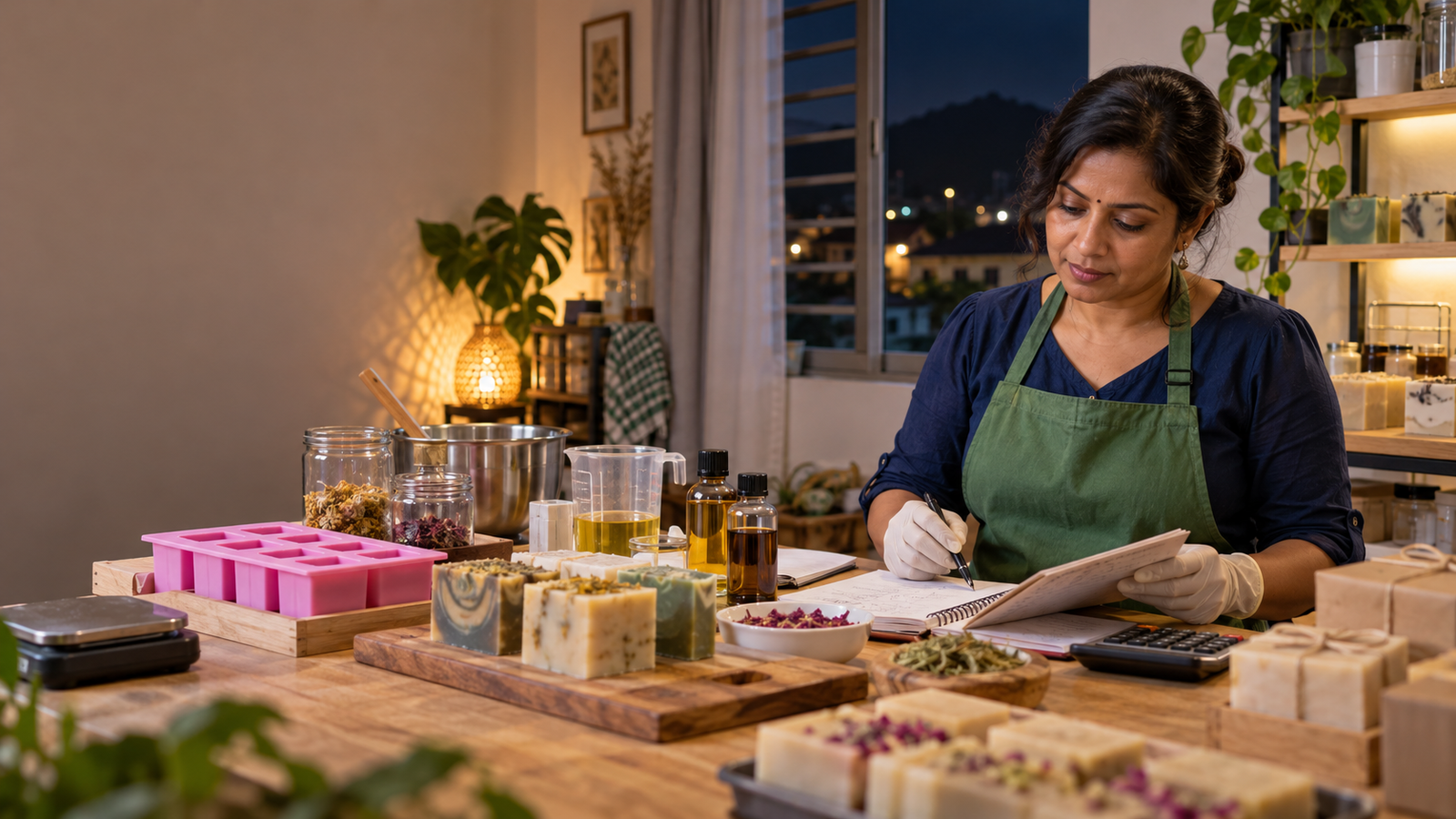

Priya made handmade soap from a small workshop in her Seremban home. Her standard bars were produced in large batches, but customers often asked for special colours, fragrances and gift packaging.
During one busy month, she collected RM4,900 in sales. Her social media page looked active, and nearly every custom order was completed on time.
Yet after paying suppliers and delivery charges, Priya had much less profit than expected. The problem was hidden inside the small custom batches.
A small order can use a large amount of time and material
Priya’s normal recipe allowed her to make many bars from one mixing session. Custom orders were different. She opened new fragrance bottles, mixed separate colours, prepared extra labels and often had leftover soap base that could not be combined with another batch.
Her standard production plan showed an ingredient and packaging cost of RM1,450. The actual amount spent was RM2,310.
The difference was RM860.
Where the extra RM860 went
Priya reviewed her receipts, test moulds and unfinished materials:
- Samples and failed fragrance tests: RM240
- Leftover soap base from small batches: RM210
- Extra colours and fragrances for custom orders: RM260
- Special boxes, ribbons and replacement labels: RM150
Each request appeared affordable when considered alone. Together, the custom work consumed RM860 that was never included in the selling price.
The real monthly result
Priya rebuilt her calculation:
- Total sales: RM4,900
- Actual ingredients and packaging: RM2,310
- Part-time help: RM600
- Electricity and water: RM180
- Marketplace fees and delivery support: RM520
- Equipment and workspace allocation: RM250
- Total cost: RM3,860
- Actual profit: RM1,040
If production costs had stayed at RM1,450, profit could have reached RM1,900. The RM860 gap came from options that customers enjoyed but did not fully pay for.
Give every batch its own record
Priya introduced a simple batch sheet with six details:
- Batch name and customer. Separate standard products from custom work.
- Expected number of bars. Use the recipe to set a target.
- Actual number produced. Count saleable bars after cutting and curing.
- Materials opened or used. Include fragrance, colour, mould liner and decoration.
- Waste and leftovers. Record failed samples, spills and unusable soap base.
- Packaging and labour time. Add boxes, labels, ribbons and extra preparation.
With this record, Priya could calculate the true cost of a custom order before giving a price.
Custom service needs clear limits
Priya did not stop offering personalised soap. Instead, she created a minimum quantity for custom colours and fragrances. Smaller orders could choose from existing options.
She also added a setup fee for new labels and packaging designs. Customers could still receive something special, while the business recovered the cost of preparation.
This made pricing easier to explain and reduced leftover materials.
Try this for seven days
Choose one product that customers frequently customise and track it for one week:
- Record every material opened for the order.
- Count the expected and actual finished units.
- Measure leftovers, tests and rejected products.
- Add packaging and preparation time.
- Compare the final cost with the price charged.
After seven days, you will know which custom options create value and which ones quietly reduce your profit.
Price every custom batch with confidence
Track materials, waste, packaging and time so personalised orders remain profitable.