Alamat
Malaysia

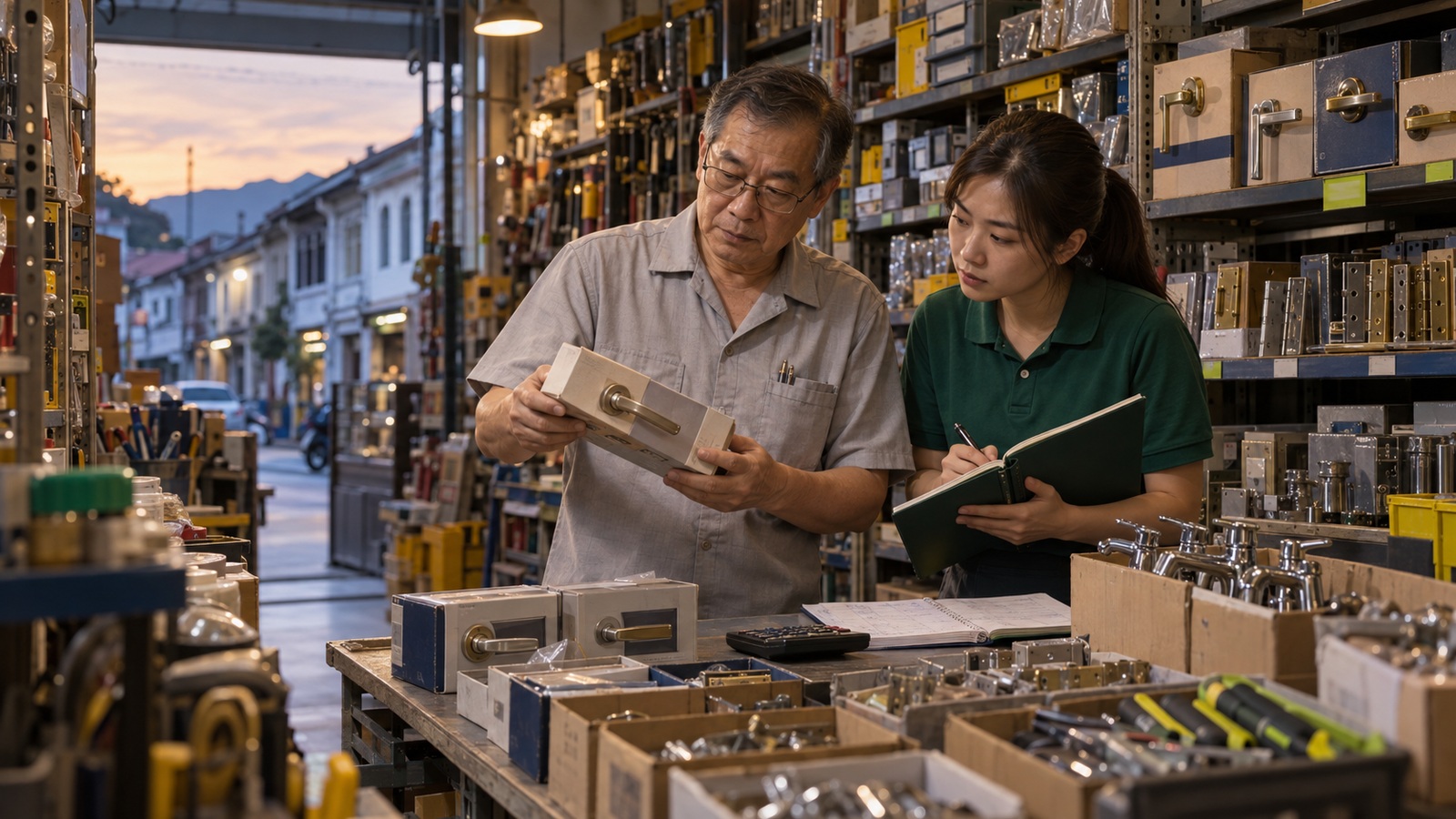

Every evening, Mr Lim looked across the packed shelves of his hardware shop in George Town and felt reassured. Boxes of door handles, taps, hinges and small tools filled almost every space.
At selling price, one section of the shop was worth about RM6,300. It looked like a strong asset.
His daughter Mei saw something different. Several boxes had dust on them, and the same products appeared in the stock count month after month.
A full shelf can still hide a cash problem
Mr Lim recorded purchases and daily sales, but he did not record how long each item had been sitting on the shelf.
When Mei reviewed six months of invoices and stock counts, she found that 38% of that section had not sold at all. Those slow items had cost the business RM1,596.
The stock was still physically there, but the cash used to buy it was no longer available for faster-selling items, rent or supplier payments.
Meanwhile, popular plumbing connectors and basic padlocks were frequently out of stock. Customers who could not find them simply visited another shop.
Retail value is not cash in the bank
Mr Lim had been valuing the shelf at its potential selling price of RM6,300. That number assumed every item would eventually sell at full price.
But some designs were outdated. A few boxes were damaged. Other items had been replaced by newer models that customers preferred.
The business had paid RM4,200 to build that stock. If RM1,596 of it remained unsold, more than a third of the purchasing money was trapped.
Even worse, the shop continued ordering similar quantities because no record showed which products were moving and which were standing still.
Mei added one simple column
Mei did not introduce a complicated inventory system. She added a column called last sold date.
For each important product, they began recording:
- quantity received;
- quantity sold;
- current balance;
- cost per unit;
- last sold date; and
- number of days on the shelf.
After one month, the difference was clear. Frequently sold products could be reordered earlier. Slow products could be reduced before more cash was committed to them.
Old stock needs a decision
Mr Lim and Mei divided the slow stock into three groups.
- Useful items that sold occasionally were kept, but no new units were ordered.
- Products with small cosmetic damage were offered at a clear discount.
- Outdated items were bundled with related products or returned to suppliers when possible.
They recovered RM780 in cash during the first month. More importantly, they used the freed shelf space for products customers requested every week.
The goal was not to clear every shelf. It was to make sure each purchase had a reason and every slow item had a decision.
Try this for seven days
Choose 20 products from one shelf, cabinet or storage area and track them for seven days:
- Count the physical units.
- Write the cost per unit.
- Record the most recent sale date.
- Mark items that have not moved for 30, 60 or 90 days.
- Stop reordering slow products until the balance falls.
- Create one practical plan for old stock: keep, discount, bundle or return.
- Use recovered cash to restock proven sellers.
After seven days, you may discover that the business does not need more stock. It needs better movement from the stock it already owns.
Turn slow stock back into working cash
Track quantities, costs and last sold dates so every shelf supports your cash flow.