Alamat
Malaysia

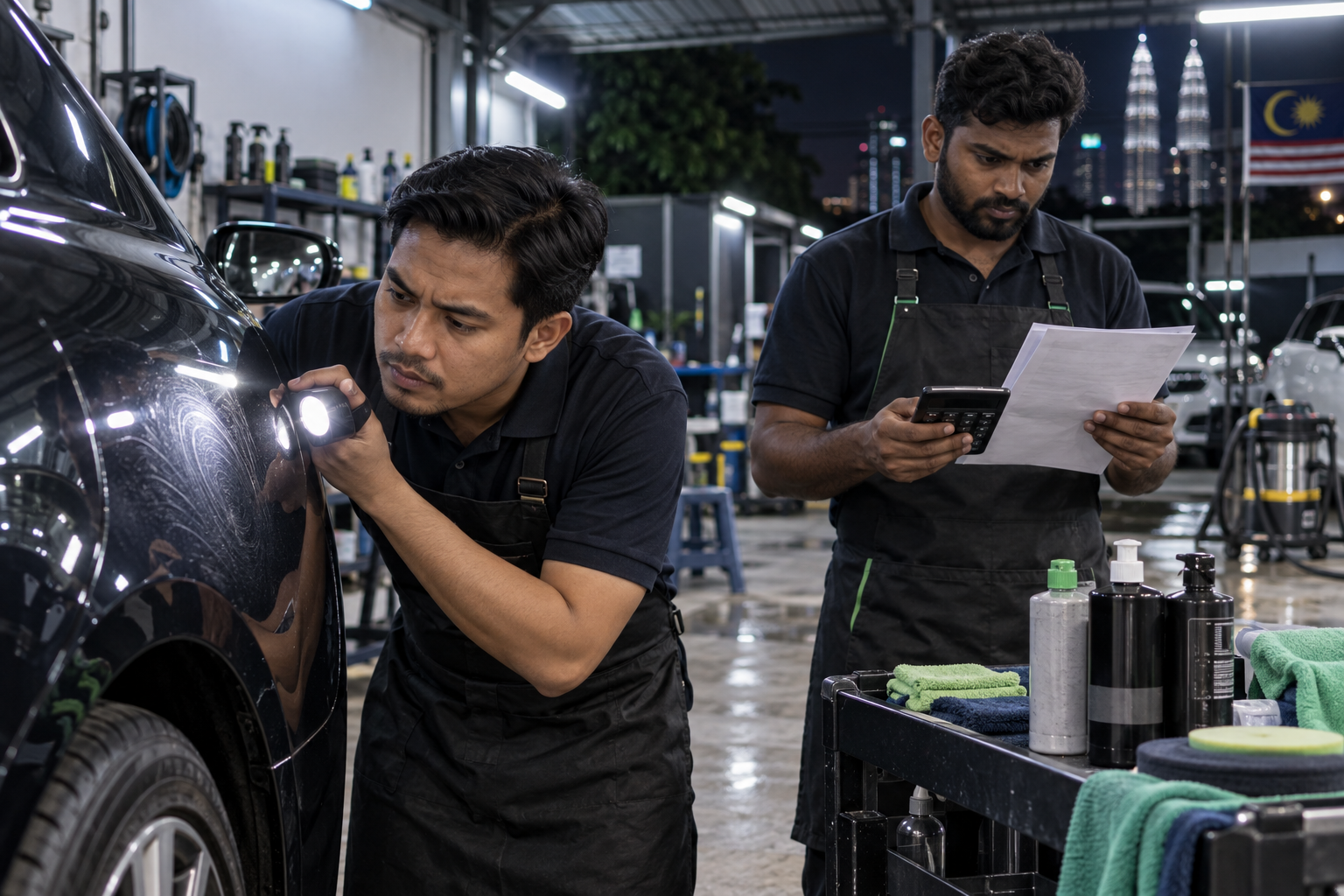

By Sunday night, Hafiz and Kumar had cleaned and polished eleven cars. Their small detailing workshop had been fully booked all weekend, and the payment notifications kept arriving.
On paper, the weekend looked successful. Sales reached RM3,850. Both partners expected a healthy profit.
But three customers returned because water marks, missed interior spots and fine polishing swirls were still visible. Hafiz and Kumar fixed every complaint for free. They treated the extra work as good customer service, but never recorded its cost.
At the end of the month, the workshop was busy and the team was tired, yet there was much less money left than expected.
Free rework still costs the business money
A correction may be free for the customer, but it is not free for the business. Rework uses labour, electricity, water, chemicals, towels and a service bay that could have been used for another paying customer.
Hafiz and Kumar reviewed one weekend and found:
- Total sales: RM3,850
- Cars completed: 11
- Cars returned for corrections: 3
- Extra labour: 7 hours
- Extra materials and utilities: RM165
- Estimated labour cost: RM245
The three corrections had quietly cost at least RM410. That figure did not include the value of appointments they could not accept while correcting old work.
Record the reason, not only the complaint
The partners created a simple rework log. For every returned vehicle, they recorded the service package, complaint, cause, materials used, extra time and staff member involved.
After two weeks, a pattern became clear. Most complaints came from the last two cars of the day. The team was rushing because bookings were placed too close together. The problem was not poor products. It was an unrealistic schedule and a missing final inspection.
A checklist protects profit
Hafiz and Kumar added a ten-minute inspection before handing each car back. One person completed the work while the other checked the paint, glass, wheels and interior under proper lighting.
They also stopped squeezing an extra booking into every busy day. Although the schedule showed one fewer car, fewer vehicles returned for corrections. The workshop used less material, reduced overtime and freed more hours for paying jobs.
Measure profit after corrections
Sales alone could not show which service package was truly profitable. The partners began subtracting direct costs and rework costs from each package.
A premium polish might bring in RM450, but if it regularly required two extra hours of correction, its real profit could be lower than a RM180 interior service completed correctly the first time.
Recording rework helped them improve prices, training and booking times using evidence instead of guesswork.
Try this for seven days
For the next seven days, record every correction, refund or repeat visit. Write down:
- The service or product involved.
- The reason the customer returned.
- Extra labour time.
- Materials or replacement stock used.
- The direct cost of fixing the problem.
- What could prevent the same issue next time.
At the end of the week, add the costs and look for repeated causes. One small process change may protect more profit than adding another booking.
See the real cost behind every completed job
Record sales, expenses and hidden rework costs so every busy day produces clearer profit.